
🔥 Introduction
A fire detection alarm system helps schools detect fires quickly and alert everyone in the building. The system uses sensors to detect heat, smoke, or flames. It then sounds an alarm to ensure staff and students can evacuate the building safely. A well-designed automatic fire alarm system helps protect lives, minimise damage, and aid schools in responding more quickly to emergencies.
Author: Sourav Kalyan (Content Writer)
🚨 What Is a Fire Detection Alarm System?
A fire detection alarm system is a system that detects fires and alerts people in the building.
It makes use of special sensors to identify warning signs of fire, like:
🔥 Smoke
🔥 Heat
🔥 Flames
If the system detects any of these indicators, it quickly triggers an alarm. The alarm can comprise:
- Sirens that sound loud
- Flashing lights
- Notifications in emergencies
These warnings inform anyone that there could be an incident of fire and that they should evacuate the building in a safe manner.
In simple terms, it is that the fire detection system acts like a “watchguard” that is constantly monitoring the structure at all times.
🏫 Why Schools Need a Fire Detection System
Schools are a bustling place. Numerous classrooms, labs, offices, and cafeterias are operating simultaneously.
Due to this, the danger of fire may rise because of:
⚡ Problems with electrical wiring in
🧪 Science Lab experiments
🍳 Cafeteria or kitchen equipment
🔌 Electrical devices that are overloaded
If there isn’t an automatic fire alarm system, it is possible that people will not be aware of an encroaching fire till it gets extremely large.
A fire detection system helps schools by:
- The fire alarm should be spotted early
- Alerting everyone quickly
- Helping people evacuate safely
- Eliminating damage to school buildings
In a lot of countries, the fire safety system is also mandated by law for schools.
⚙️ How Does a Fire Detection Alarm System Work?
The Fire Detection Alarm System works with a variety of devices.
They continuously monitor the surrounding environment for signs of fire. If anything unusual is found, the system will immediately trigger the alarm.
Here’s how the process operates:
Step 1: Detection
Special sensors can detect smoke, flames, or heat.
Step 2: Signal Sent
The sensor sends an alert to the control centre.
Step 3: Alarm Activation
The system triggers loud alarms as well as warning lights.
Step 4: Evacuation
Staff and students are able to leave the building in peace.
The entire process takes only a few seconds.
🔧 Main Fire Alarm System Components
An alarm system for a fire detection alarm system comprises a number of crucial components. These fire alarm system components are all in sync to safeguard the structure.
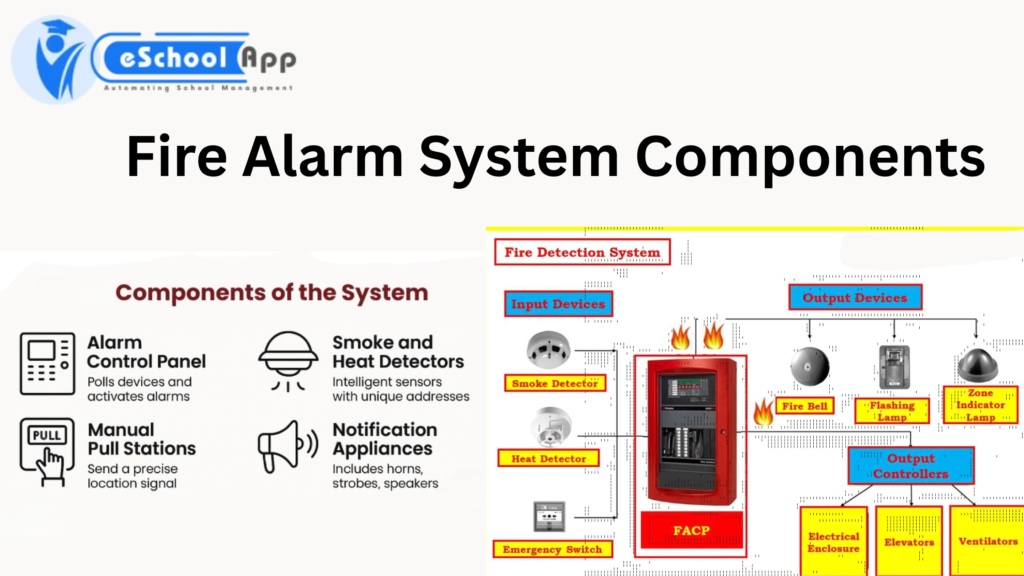
Let’s take a look at the most important elements.
1️⃣ Fire Alarm Control Panel
The control panel acts as the central nervous system.
It takes a signal from every sensor and determines when to set off the alarm.
If any detector detects flames or heat, the control panel will send an alarm signal to alarm devices.
2️⃣ Smoke Detectors
Smoke detectors are among the most vital devices within the fire detection system.
They can detect smoke particles within the atmosphere.
When there is a smell of smoke The alarm system immediately informs all the people in the building.
3️⃣ Heat Detectors
The heat detectors measure the temperature of the room.
If the temperature increases suddenly or exceeds a risky level, it activates the alarm.
These detectors are typically utilised in laboratories and kitchens.
4️⃣ Manual Call Points
Manual call points enable users to set off the alarm on their own.
If they see a fire, it is possible to use the alarm button to alert everyone immediately.
These devices are typically placed in hallways, at exits, and at the end of hallways.
5️⃣ Alarm Sounders and Flashlights
When the system detects the presence of fire, alarm sounders make alarm sounds that sound like a loud alarm.
The flashing lights make it easier for people to notice the alarm, even in noisy areas.
This will ensure that everyone is aware of any emergency.
🤖 What Is an Automatic Fire Alarm System?
An automatic fire alarm system is a kind of fire alarm system that is operated in a way that is automatic.
It doesn’t need an individual to activate the alarm.
Instead, it makes use of intelligent sensors that can detect fire signals immediately.
If heat or smoke is discovered, the system alerts and alarms.
This helps schools respond more quickly in times of emergency.
Automated systems are regarded as more reliable since they function even if nobody is aware of the fire.
📊 Difference Between Fire Detection System and Fire Alarm System
Many believe that these two systems are identical. However, they perform distinct roles.
| Feature | Fire Detection System | Fire Alarm System |
| Purpose | It detects signs of fire, such as heat or smoke | Alerts people to the possibility of fire |
| Function | Sensors detect danger | Lights and sirens are activated |
| Role | Discovers the cause | Everyone is warned |
| Example | Smoke detector | Alarm siren |
In modern-day structures, both systems function together to form a complete fire detection alarm system.
🌟 Benefits of Fire Detection Alarm System in Schools
Installing a fire detection alarm system provides numerous benefits to schools.
🛡️ Early Fire Detection
The system detects fire at the very beginning.
This gives people time to safely evacuate.
🚨 Quick Warning
Alarms that sound loud and flashing lights immediately alert teachers and students.
This reduces confusion and panic during times of crisis.
👨🎓 Student Safety
The most important benefit is the protection of students.
Children might not be aware of dangers immediately; therefore, an automated system helps to keep them safe.
🏫 Protection of School Property
Schools have laboratories, classrooms, libraries and other equipment.
Early detection of fires helps minimize the damage to these important assets.
📋 Compliance With Safety Rules
A number of safety regulations force schools to install fire alarms.
The system assists schools in adhering to these safety guidelines.
🧠 Smart Fire Safety Tips for Schools
Alongside the installation of a fire detection system, schools must also observe safe practices for safety.
Here are some tips to help you get started:
✅ Perform regular fire drills and
✅ Check alarm systems frequently
✅ Training staff to respond in emergencies
✅ Keep exits for fire free of obstructions
✅ Set up fire extinguishers at the entrances to important areas
These measures improve the overall safety of fire.
💡 How eSchoolApp Helps Schools Improve Safety
Schools are getting more intelligent and safer thanks to the advancement of technology.
eSchoolApp offers digital school management solutions to aid schools in managing their operations more efficiently.
While fire safety systems safeguard structures, digital platforms such as eSchoolApp assist schools with managing information, communication, and emergency coordination better.
Combining smart technology with security systems, schools can create a safer and more secure learning atmosphere.
🏁 Conclusion
Safety in the event of fire is a major concern in schools.
An alarm for the fire detection alarm system helps detect fire quickly and notify everyone immediately. This helps students, teachers and staff to exit the building without fear during an emergency.
Modern automatic fire alarm system utilise advanced sensors that detect heat, smoke, or flames in a flash.
The system is integrated with a variety of fire alarm system components, including fire detectors for smoke, heating detector control panels and alarm sounders.
If schools set up these systems and adhere to safety procedures, they provide an environment that is more secure for the students.
The investment in a reliable fire detection system isn’t only about following safety guidelines. It’s about protecting children’s lives and ensuring that each child is educated in a safe area.
❓ FAQ’s
1️⃣ What is a fire detection alarm system in schools?
Ans: A fire detection alarm system is a security system that detects heat, smoke or fire in the school’s structure. If the system detects danger, it triggers an alarm that alerts the teachers and students that they can evacuate the building without danger.
2️⃣ How does a fire detection system work?
Ans: A fire detection system utilizes devices like heat sensors and smoke detectors to determine the presence of fire. When the detectors detect smoke or a high temperature, they transmit an alert to the controller that triggers the alarm.
3️⃣ Why do schools need an automatic fire alarm system?
Ans: An automated fire alarm system can help schools detect fires quickly, without the intervention of humans. It alerts staff and students immediately, which reduces injuries and lessens the damage to buildings at schools.
4️⃣ What are the main fire alarm system components?
Ans: The primary fire alarm system components comprise the fire alarm control panel and smoke detectors, as well as heat detectors and manual call points, and alarm sounders. These devices all work to detect fires and alert the public to danger.
5️⃣ Where should fire detection systems be installed in schools?
Ans: A fire detection alarm system should be set up in the classrooms and laboratories as well as cafeterias, corridors and libraries and close to electrical rooms. The system will be able to detect fire in any area of the school’s building.
6️⃣ When should a fire alarm system be tested in schools?
Ans: Schools must examine their fire detection system often, ideally once a month. Regular testing will ensure that the automatic alarm system is working properly in emergency situations.
7️⃣ Who is responsible for maintaining the fire alarm system in schools?
Ans: School safety officers or the school’s management are typically responsible for maintaining the fire detection alarm system. They ensure that the fire alarm system’s components are functioning properly.
8️⃣ Can a fire detection system prevent fire accidents?
Ans: The fire detection system can’t prevent a fire from beginning; however, it is able to detect fires early and notify people of the danger quickly. Early detection can help schools manage the situation and safeguard the students and staff.