
🤖 Introduction
The education system in India can be described as a standardised system that allows students to learn from primary school through higher education. It comprises colleges, schools, and universities. In the present, the modern education system in India is evolving with the use of digital technology, smart classes, and a skill-based learning system. This system allows students to grow as they learn new skills and prepares them for jobs in the future.
Author: Sapna K (Content Writer)
📚 What is the Education System in India?
In India, the education system of India is how students learn and study in colleges and schools. It is broken down into various levels, like primary, secondary, higher, and tertiary education.
🏫 Levels of the Education System
- Primary Education (Classes 1-5)
- Upper Primary (Classes 6-8)
- Secondary Education (Classes 9-10)
- Higher Secondary (Classes 11-12)
- Higher Education (College & University)
👉 This structure keeps the current education system in India efficient and easy to follow.
❓ How Does the Education System in India Work?
It is believed that the education system in India operates in an orderly manner. The students begin with basic education and progress to more advanced subjects.
🧠 How learning happens:
- Students are enrolled in classes every day
- Teachers explain lessons
- Exams check student performance
- Activities improve skills
👉 Nowadays, we have a present education system in India that also includes online classes and other digital tools.
🌍 Development of Education System in India
The development of education system in India has been undergoing several changes over the years.
🕰️ Earlier System
- The focus should be on the rote aspect of learning
- Resources are limited
🚀 Modern System
- Smart classrooms
- Digital learning apps for digital learning
- Education based on skills
👉 The modern education system in India is based more on practical skills.
⭐ What Makes the Best Education System in India?
The best education system in India is comprised of:
- Teachers with qualifications
- Modern technology
- Practical learning
- Methods that are student-friendly
👉 Many compare it with the best education system in the world, which places a lot more emphasis on innovation and creativity.
⚖️ Education System in India: Advantages and Disadvantages
✅ Advantages
- 📘 Facilitates the opportunity for structured learning
- 🌐 The increasing use of technology
- 🎓 Numerous career paths
❌ Disadvantages
- 📚 Too much pressure to pass exams
- 🧠 Focus less on creativity (in certain schools)
- 🌍 Access to rural areas is not equal
🔍 Why is the Education System in India Important?
The education system in India helps students:
- Learn to build knowledge
- Develop skills
- Get better job opportunities
👉 It plays an important part in the development of the nation.
💡 Benefits of the Modern Education System in India
The modern educational system in India has many advantages:
📱 Online learning
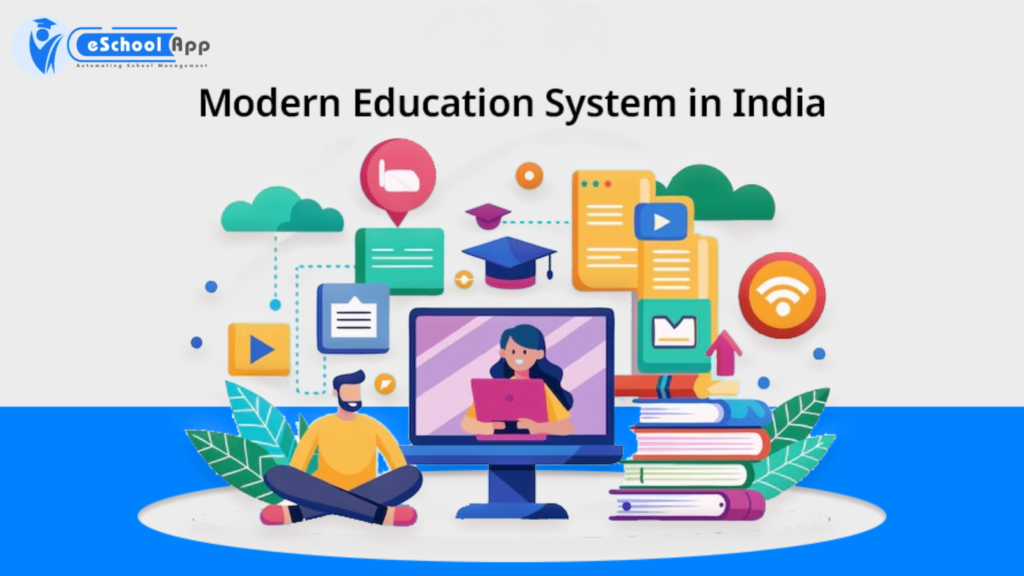
Students can take classes from home using laptops, mobile phones, or tablets. They can view videos, take online classes, and take classes whenever they want to.
🎯 Training that is based on skill
Students acquire useful skills, such as programming, communication, and solving problems. This is helpful in their real-world and future job opportunities.
🤝 Improved teacher-student interactions
Students and teachers can easily communicate and clarify their questions using the internet and smart classes. This makes learning simpler and more enjoyable.
👉 This makes learning more enjoyable and simple.
🔄 Difference: Traditional vs Modern Education System in India
| Feature | Traditional System | Modern System |
| Learning Style | Learning through repetition | Practical learning |
| Tools | Only books | Apps and smart classes |
| Focus | Exams | Skills + Knowledge |
🗣️ Testimonials
💬 “The innovative digital technologies have helped make learning simpler for students.”
💬 “Smart classes can help students learn quickly about topics.”
💬 “Modern learning is interactive and enjoyable.”
🏁 Final Words
The education system in India is expanding and improving each day. With the latest technology and more effective techniques for teaching, the future appears promising. The modern education system in India aids students in attaining their goals.
👉 If improvement continues, India can build one of the best education systems in the world.
❓ FAQ’s
Q.1 What is the education system in India, and how does it work?
Ans: The system of education in India can be divided into secondary and primary, in addition to higher. Students are guided step-by-step through their classes and exams.
Q.2 Why is the education system in India important for students?
Ans: It aids students to gain understanding, build skills, and prepare themselves for the future and career opportunities.
Q.3 How is the modern education system in India different from the old system?
Ans: The contemporary educational system of India makes use of the latest technology and smart classes and emphasises learning in the context of practical experience rather than rote learning.
Q.4 What are the main problems in the current education system in India?
Ans: Common issues include the pressure of exams, a lesser emphasis on creativity, and the unavailability of high-quality education in rural areas.
Q.5 Is the education system in India one of the best in the world?
Ans: The Indian system is getting better, but the top education systems around the globe focus more on creativity, innovation, and learning based on skills.
Q.6 How can the education system in India be improved?
Ans: It is possible to improve it through the use of more technological advances, focusing on learning and reducing pressure on exams, and making education more accessible to every student.